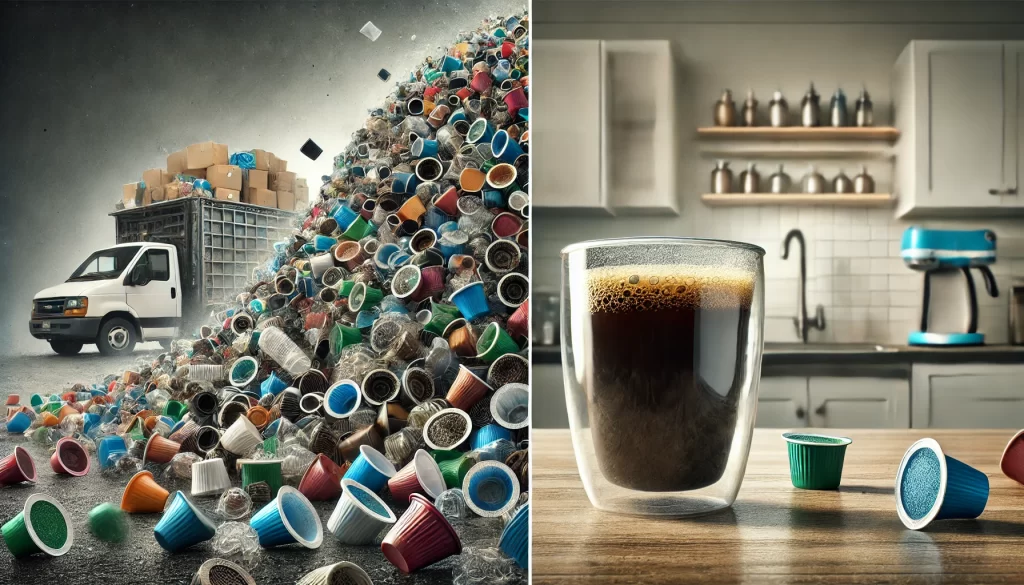
Coffee pods are convenient and easy, but they hide troubling health and environmental issues. Most coffee pods are made from plastic materials like polypropylene, which can release tiny plastic particles called microplastics into your coffee, especially when heated (Million Marker, 2020). These microplastics can carry harmful chemicals that disrupt hormones, potentially affecting fertility and overall health (PMC, 2020).
Health Risks of Coffee Pods
Ingesting microplastics has been linked to several potential health issues:
Hormonal imbalances (PMC, 2020)
Fertility problems (PMC, 2020)
Increased risk of certain cancers (Million Marker, 2020)
Metabolic disorders like obesity and diabetes (Million Marker, 2020)
Thyroid dysfunction and developmental issues (Million Marker, 2020)
Environmental Impacts of Single-Use Coffee Pods
Every year, billions of coffee pods end up in landfills because they’re difficult to recycle (Mongabay, 2022). These pods take hundreds of years to break down, polluting soils and oceans with persistent plastic waste (Smithsonian, 2020).
European Governments Take Action Against Coffee Pods
Recognizing these significant issues, governments across the European Union have started banning single-use coffee pods due to their harmful environmental impacts. The estimated health and environmental costs of using coffee pods globally amount to billions of dollars annually from pollution cleanup and health-related issues caused by microplastic ingestion.
A Healthier, Eco-Friendly Coffee Alternative: Beancraft’s Bianchi Machine
There’s a simple and delicious solution: switching to a Bianchi coffee machine provided by Beancraft. These machines use freshly ground coffee beans instead of plastic pods, eliminating microplastic contamination. Freshly brewed coffee from whole beans also offers a richer, more satisfying taste.
Beancraft’s Bianchi coffee machines don’t just deliver a healthier, better-tasting cup of coffee—they significantly reduce plastic waste. By choosing this sustainable alternative, you’ll enjoy your coffee knowing you’re making a positive difference for your health and the environment.
Make the switch today! Visit Beancraft to savor coffee the way it’s meant to be—fresh, safe, and eco-friendly.
Frequently Asked Questions (FAQs)
What are microplastics?
Tiny plastic particles released from products like coffee pods that can enter our bodies and ecosystems.
Why choose Beancraft’s Bianchi coffee machines?
They offer a healthier coffee option by eliminating plastic pods, reducing microplastic exposure, and providing superior taste.
Are coffee pods recyclable?
Most pods are challenging to recycle effectively, contributing to significant environmental pollution.
Sources
- Government of Canada, Science assessment of plastic pollution (2020) — plastic packaging is a major share of plastic waste in Canada; plastics degrade slowly and persist in the environment; research on microplastics in food is limited.
- Kooduvalli, Vaidya & Ozcan, Life Cycle Assessment of Compostable Coffee Pods, Scientific Reports (2020) — single-use coffee pods create substantial landfill waste; conventional plastic pods are difficult to recycle in practice because materials must be separated and many facilities cannot sort small pod components.
- Zimmermann et al., Food contact articles as source of micro- and nanoplastics, npj Science of Food (2025) — systematic evidence map finding that normal/intended use of plastic food-contact articles can release micro- and nanoplastics into foodstuffs.
- U.S. FDA, Microplastics and Nanoplastics in Foods — notes microplastics may be present in foods; states current evidence does not demonstrate that detected levels pose a risk to human health.
- U.S. EPA, Plastics: Material-Specific Data — national plastics recycling and waste figures.